
How to Pass a Soccer Ball-7 Steps.
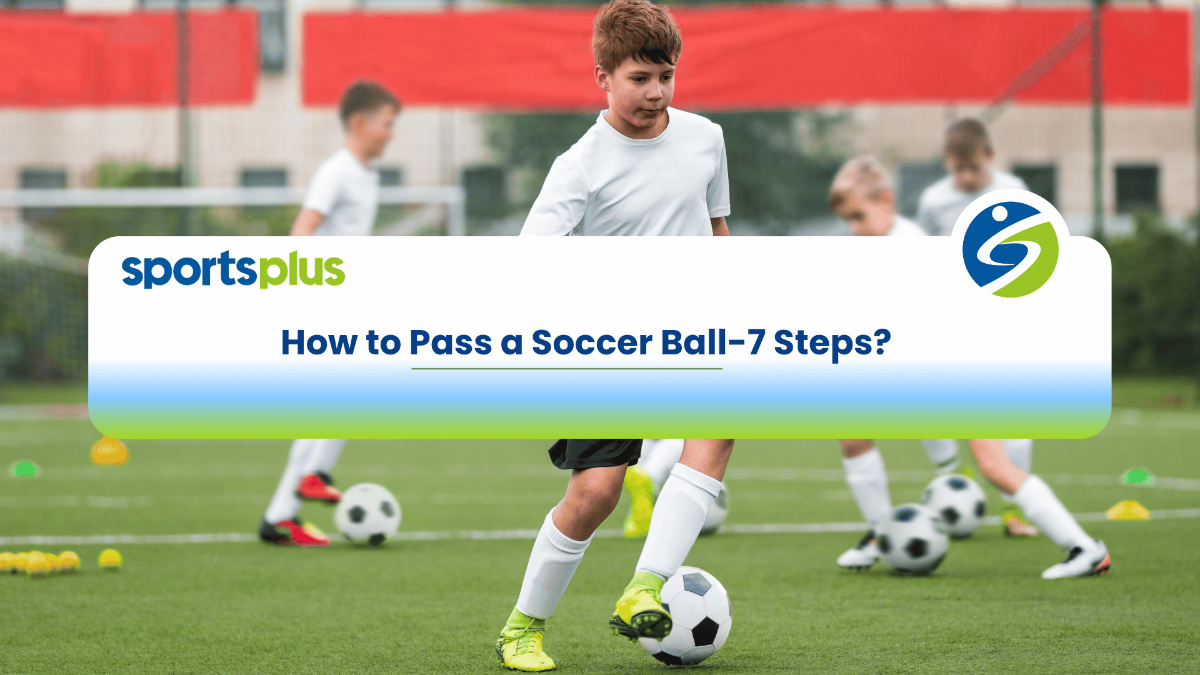
It is possible to learn how to pass the ball accurately in soccer. Standing on one foot next to the ball, locking one's ankle, opening one's hips, and striking the ball with one's inside foot through its center are the basic steps. The next step is to go forward swiftly when you have made a decision to do so.
At its heart, that is it. However, the majority of players who have trouble passing are not kicking poorly. What occurs prior to and following contact is where they are falling short. Including the scanning and decision-making that precede a good pass and the action that ought to follow one, this manual walks through all seven stages.
If you're a coach, a parent, or a player trying to improve your game, this breakdown will help you understand what makes a technically good and tactically wise pass.
Key Takeaways
- The pass begins before you touch the ball. Scanning the field before receiving allows you to make faster, better decisions under pressure.
- Plant foot direction determines pass accuracy. Point your standing foot directly at your target. Where it points is where the ball will go.
- Ankle lock is non-negotiable. A relaxed ankle at contact produces a loose, inaccurate pass. Keep it firm.
- Weight of pass is a separate skill from accuracy. A pass that reaches your teammate at the wrong speed, even if perfectly aimed, is a bad pass.
- Move after you pass. Standing still after releasing the ball removes you from the play and leaves your team with one fewer option.
- Practice with both feet. The better you get at passing with both feet, the better your overall game becomes. Becoming two-footed removes predictability and opens up more options in every situation.
Quick Reference: The 7 Steps 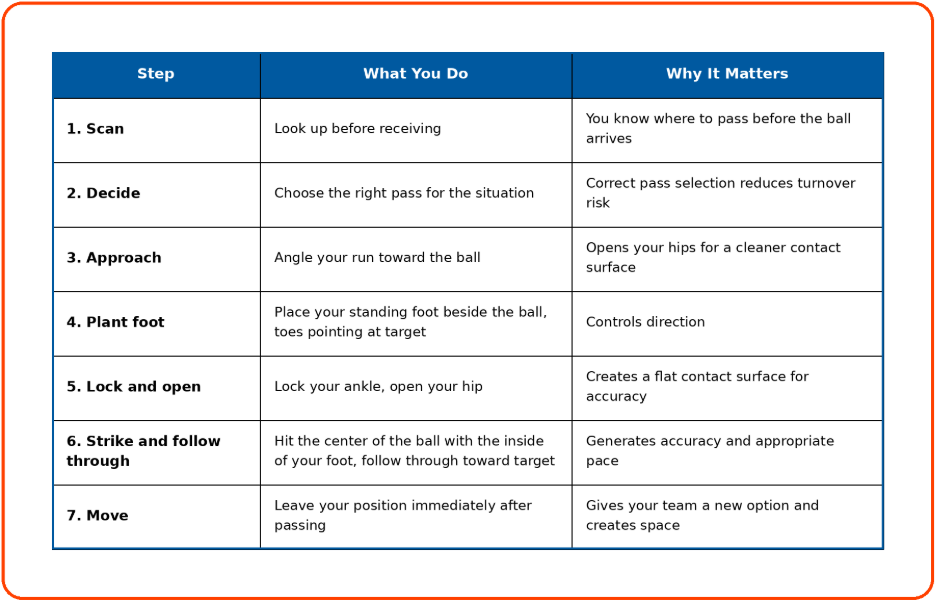
Why Passing Is the Most Important Skill in Soccer
The most common soccer skill is passing. A pass that is accurate under pressure with the appropriate weight and to the right foot offers the team a platform to develop from. A player who loses his passes under pressure loses the ball at the most crucial moments. One of the most important indicators of a soccer team’s quality is ball possession. More possession often means teams are able to control the game and create more chances to score. And possession is built on pass after pass.
Accurate passing keeps the ball in your team and reduces the probability of the other team scoring a goal. Fast passes will pull opponents out of position and offer up passing lanes for teammates.
And the pass is the ability that translates most quickly across all positions and ages Everyone has to be able to pass correctly, a goalie, a central defender, a midfielder and a striker. Teaching it right from the start saves years of unlearning poor behaviors.
The 7 Steps to Pass a Soccer Ball Correctly
Step 1: Scan the Field Before You Receive the Ball
Your passing starts with your eyes, not your feet Keeping your head up allows you to see where your teammate is and make last-second modifications to your pass. Knowing the right way to pass is pointless if you don't know where to send the ball. To make the right pass at the right moment you need a good picture of what’s going on in the pitch.
The most prevalent form of this blunder is when a player has the ball, looks up, sees a teammate and picks where to pass. At the point of decision, the defender has moved, the passing path is closing and the player is under pressure.
The correction is to look over your shoulder or around you just before the ball arrives. Elite players will typically look two or three times visually before they ever touch the ball. Building this habit early even at youth level makes every other stage easier since you are reacting to an image you already have not one you’re still attempting to construct.
Coaching cue: "Show me your head before the ball gets to your feet."
Step 2: Choose the Right Type of Pass
Once you know where your teammates are, you need to choose the right pass for the situation. The first step for passing a soccer ball better is to understand the different types of passes and understand what passing technique you need for different situations.
A short ground pass is the most common choice and the most reliable. There are many different ways to pass the soccer ball, from using the instep of your foot for a short or medium distance pass, to using the outside of your foot for a long ball. The push pass, a short to medium distance pass with the instep of the foot, is the most popular type of pass in soccer and one that is essential to practice at all levels from youth soccer to professional soccer, and for all positions from goalkeeper to forward.
Choosing correctly also means reading the game situation:
- Short pass: Maintaining possession in tight spaces, recycling the ball, building through the back
- Through pass: Sending the ball into space behind a defensive line for a runner
- Long pass: Switching the play or finding a teammate beyond defenders
- Back pass: Releasing pressure when forward options are blocked
Before making a pass, visualize your target on the field and try to see the finished pass in your head before it happens in real life.
Beginners should master the short ground pass before attempting any other type. Everything else builds on that foundation.
Step 3: Approach the Ball at an Angle
The approach is where body shape begins. Most players walk straight up to the ball and then try to rotate their hip into position at the last moment. That produces a cramped, arm-assisted kick with poor contact. Angle your run slightly, approaching the ball at 20 to 30 degrees rather than straight on. This positioning opens your hips and allows better weight transfer.
A slight angle naturally opens the body, creates space for the hip rotation that follows, and allows the kicking leg to swing freely through the ball. It also lets you see the target more clearly in your peripheral vision as you approach.
For young players, this can be simplified: "Walk toward the ball from the side, not straight on."
Step 4: Plant Your Standing Foot Beside the Ball
Position your non-kicking foot beside the ball, pointing toward your target. Your plant foot placement determines pass direction and accuracy.
This is the single most important mechanical step. Where your standing foot points is where the ball will go. If it points left, the ball goes left. If it points at your teammate, the pass reaches your teammate.
Specific placement:
- Place the standing foot alongside the ball, roughly in line with it or a few inches behind
- Not too close (cramping the swing) and not too far (losing balance and control)
- Knee slightly bent to absorb the weight shift
By positioning your upper body directly over the ball when you connect with it, you are ensuring a firm connection with the ball and are less likely to lift it while passing.
Leaning back will send the ball into the air. Staying over the ball keeps it on the ground.
Common error: Standing foot placed too far behind the ball. This forces the player to lean back and results in a lifted, scuffed pass. The fix is simply to place the foot more in line with the ball.
Step 5: Lock Your Ankle and Open Your Hip
Two things happen almost simultaneously here, and both are essential.
Ankle lock: Locking your ankle is an essential part of multiple techniques in soccer. For an instep pass, locking your ankle means flexing your passing foot at the ankle up and slightly back. Think of pulling your toes up, and then rotating them slightly to the outside.
A loose, relaxed ankle at the moment of contact produces a wobbly, inaccurate pass. A locked ankle creates a firm, flat surface that transfers energy cleanly into the ball. With your hip open and ankle locked, you will be contacting the ball flat and head-on with the instep of your foot, allowing for complete control over the pass and minimal spin.
Hip rotation: Open your kicking hip outward so the inside of your foot faces the target. This is what allows the large, flat surface of the inner foot to meet the ball squarely rather than at a glancing angle. Players who skip this step end up kicking with the toe or the heel by accident.
Coaching cue: "Toes up, toes out."
Step 6: Strike the Center of the Ball and Follow Through
Strike the ball with the inside of your foot, using the large surface area from the base of your big toe to your heel. Turn your kicking foot outward approximately 90 degrees. Hit the centre of the ball for ground passes.
Contacting the center of the ball is what keeps it on the ground and on target. Striking below center sends the ball into the air. Striking off-center adds unwanted spin and pulls the ball wide.
Players often make the mistake of hitting the bottom of the ball, elevating it slightly off the ground. This is usually due to the standing foot being placed too far behind the ball and the player leaning back.
The follow-through: You’re not done kicking when you touch the ball. Your foot has to get through the ball in the follow-through. After contact, follow through with your kicking leg toward the target, keeping your ankle locked. A full follow-through means power and accuracy.
Think of it as pointing your foot at your teammate after the ball has left it. Players who stop their foot at contact produce short, underpowered passes. The follow-through is what sends the ball across the distance at the right pace.
Step 7: Move Immediately After You Pass
This step is where most instructional guides stop. They should not. A very common beginner habit is passing the ball and then stopping. Soccer is a fast-paced game where constant movement matters.
After releasing the ball, your job is not done. Moving into a new position does three things:
- Creates a new passing option for the teammate who just received your pass
- Clears the space you were occupying, which may have been blocking a teammate's movement
- Keeps defenders working, since a stationary player after a pass becomes easy to mark
The simplest movement is a support run, stepping into a new angle where the receiver can easily play the ball back. In a give-and-go or one-two combination, this happens within two seconds of releasing the ball.
More advanced players will make runs into space behind the defense, across the field, or into support positions depending on where the next phase of play is going.
The mindset shift: Teach players to think of the pass as the beginning of the next action, not the end of the current one.
How to Pass with Different Parts of the Foot
The inside-foot pass (push pass) is the foundation. These variations build from it:
Outside of the foot
This is a more advanced technique. It is quicker and more deceptive than using the inside of the foot, as players do not have to open their body up to play the pass. It requires a lot of practice to get right.
Used to pass in the direction you appear to be moving, making it harder for defenders to anticipate.
Lofted pass (driven through ball)
The lofted pass is similar to a chipped pass but is executed by lifting the ball higher into the air over a longer distance. This type of pass is crucial for avoiding defenders and getting the ball to a player further down the field.
Strike through the bottom third of the ball with the instep (laces area) and lean back slightly. Used for long switching passes and cross-field balls.
Chipped pass
A chipped pass happens by lifting the ball slightly off the ground to pass it over an opponent. This technique is useful in situations where a ground pass might be intercepted.
Best used over short distances when a defender is blocking the direct ground line.
Back heel
A short, deceptive pass using the heel of the foot when facing away from the intended target. Effective in tight spaces but requires a trusted, aware receiving teammate.
What Is the Weight of a Pass and Why Does It Matter?
Weight of pass refers to the pace, or speed, at which you send the ball to a teammate. The weight of a pass is essential in every pass. How much power or force to put on the ball gives a player a huge advantage. Like the timing of a pass, if the weight of a pass is misjudged, meaning too heavy or too light, then an attack or phase of play will be broken down.
A perfectly aimed pass that arrives too hard forces the receiver into a bad first touch. A pass that arrives too softly gives a defender time to close down and intercept.
The weight of a pass should always account for:
- Distance: Longer passes need more pace to arrive with enough energy, but not so much that they overshoot
- The receiver's movement: A pass that reaches your teammate too fast or too slow makes control harder. Think about where they are moving, not just where they are standing.
- Surface and conditions: A wet pitch slows the ball; artificial turf speeds it up. Adjust accordingly
- Pressure on the receiver: A teammate under immediate pressure from a defender needs a firm, accurate pass to feet. A teammate in open space can take a lighter pass to run onto
Weight is developed through repetition and feel, not just instruction. Regular partner passing at different distances builds the sensitivity needed to judge it consistently.
Common Soccer Passing Mistakes (and How to Fix Them)
Common mistakes when passing in soccer include improper technique, inaccurate passes, poor decision-making, and lack of vision. Players often make the mistake of rushing their passes or not properly assessing the game situation.
Here are the most frequent errors and their practical fixes: 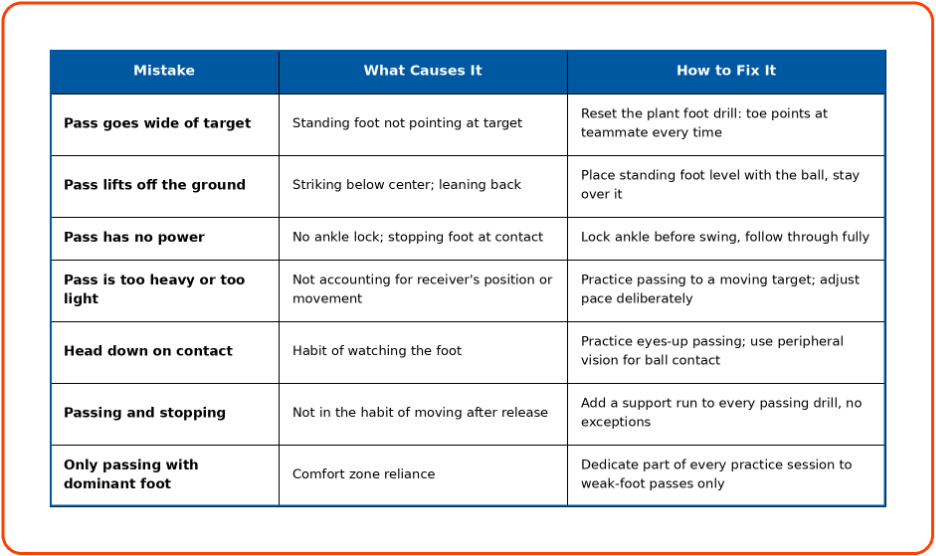
Beginners often strike the ball too hard or use the wrong part of the foot. Accurate passing is essential for teamwork and building attacks.
How to Practice Passing on Your Own
You do not need a partner to improve your passing. Here are three solo methods:
1. Wall passing
Find a flat wall and a smooth surface. Mark a target on the wall roughly one meter square. Pass to the target with your inside foot from 5 meters. Collect the rebound and pass again. Progress to passing with your weak foot. Add pace as accuracy improves.
2. Gate passing with cones
Set two cones 50 centimeters apart at 10 meters distance. Pass through the gate with your inside foot, walk to collect, reset, and repeat. Move the gate to different positions to practice passing to different angles.
3. Moving ball practice
Roll the ball forward along the ground, take two steps alongside it, and pass it into a target wall or toward a cone while it is still moving. This trains you to pass a ball that is not stationary, which is almost always the situation in real games.
Coaches recommend practicing kicking drills three to five days a week for 10 to 20 minutes. Consistency matters more than session length. Ten focused minutes every day builds more reliable technique than an occasional long session.
Passing Drills for Youth Coaches
Youth soccer passing drills are simple practice activities that help players improve passing accuracy, movement, teamwork, and possession. They give players repeated reps at passing and receiving while also learning to find open space.
A few structures that work at most youth levels:
Partner passing (U6 to U18, all levels)
Divide your team into pairs. Each pair gets a ball. Players should start about 10 to 15 yards apart. Focus on one technical point per session: plant foot one week, follow-through the next. Do not overload young players with multiple corrections at once.
Triangle passing (U8 and above)
Teaching basic ball control, passing, and teamwork is essential for young soccer players. One of the most effective ways is through youth soccer triangle passing drills. These drills help kids learn how to pass the ball accurately, move into space, and communicate with their teammates.
Three players, three cones in a triangle. Player passes, player moves to a new cone. Teaches support angles and movement after passing.
Rondo (U10 and above)
A rondo introduces a defender without immediately turning the session into a full game. Begin with four attackers against one defender in a manageable area. The attackers keep the ball by creating passing angles, moving after each pass, and recognizing pressure before receiving.
Age-appropriate adjustments:
For younger or beginner players, keep passes shorter and use bigger targets. For older or more advanced players, gradually make the passes longer and the targets smaller. Focus on technique before speed. Speed comes naturally as technique becomes reliable. Drilling at maximum speed before the movement pattern is sound just rehearses bad habits quickly.
A Self-Coaching Checklist for Passing
Use this checklist during practice to identify what needs work. Players can use it independently or coaches can use it as an observation guide.
Before the pass:
- Did I look up before the ball arrived?
- Did I identify where I was passing before I received the ball?
- Did I choose the right type of pass for the situation?
During the pass:
- Did I approach the ball at an angle?
- Is my standing foot pointing directly at my target?
- Is my ankle locked before contact?
- Did I stay over the ball (not leaning back)?
- Did I strike the center of the ball?
- Did I follow through toward my target?
After the pass:
- Did I move immediately after releasing the ball?
- Did I create a new passing option for my teammate?
If three or more boxes are unchecked, focus the next practice session on those specific points only.
How SportsPlus Supports Player Development and Coaching
To develop technically sound players, structured and consistent practice is required. This demands structured, consistent coaching. And coaching at scale requires an administrative basis that doesn't absorb all of a coach's time.
SportsPlus is a sports organization management platform that assists coaches, club administrators and league managers to manage scheduling, team communication, player rosters, and session planning all in one location. There is less time spent pursuing sign up forms and rescheduling emails, which means more time for coaches to prepare sessions like this one.
For clubs that have multi-team programs where passing technique needs to be taught consistently from U8 to U18 teams, having one system for coach coordination, practice scheduling and team communication really makes a difference to what is actually taught week to week.
Final Takeaway
The Kick is less important to passing a soccer ball successfully, than the decisions and behaviors around the kick. Players that scan before they receive, make the right pass, put their body up properly, lock their ankle at contact and move right after will be better than players who just practice hitting the ball harder.
This guide has seven steps and is not a checklist to go through once. They are a structure to fall back on when things are going wrong. If the pass continues to rise, evaluate the plant foot position and angle of the body. If missing left or right passes verify standing foot direction. If a player seems slow to make decisions, check to see if they are scanning early enough.
They’re all fixable things, coachable things, practicable things. Practice and create the habit, it will carry over into the game.
If you are a coach or manager of a team and would like to spend more time on sessions like these and less on admin logistics, then check out what SportsPlus can do for your organization. One platform to manage rosters, schedule sessions and communicate with parents and players means more time for the good coaching that really matters.
Frequently Asked Questions
What is the easiest way to pass a soccer ball accurately?
To pass a soccer ball effectively, point your standing foot towards your target as you kick the ball with the inside of your foot. Then ensure you follow through with the foot that strikes the ball after making contact. The inside of the foot provides the largest, flattest contact surface, making it the most reliable and accurate technique for beginners.
What part of the foot should you use to pass a soccer ball?
The inside of the foot is traditionally the technique players master first. This simple side-foot approach is a great way to pass the ball accurately. Once the inside-foot pass is reliable, players can develop the outside-foot pass and the lofted pass for different game situations.
Why does my soccer pass keep going wide?
The most common cause is a standing foot not pointing at the target. Make sure your plant foot faces your target. Check whether the standing foot is angled left or right of the intended direction. Even a few degrees of difference in foot placement will send the ball off course.
Why does my pass keep lifting off the ground?
A common mistake is contacting the bottom of the ball, which ends up lifting it slightly off the ground. This is usually caused by the standing foot being placed too far behind the ball, which makes the player lean back at contact. Move the plant foot forward to sit level with the ball and stay over it.
How do you add more power to a pass?
Power comes from a firm ankle lock and a complete follow-through, not from swinging harder with the leg. Engage your ankle to swing the foot through the ball while keeping the ankle locked in place. Stopping the foot at the moment of contact reduces the energy transferred to the ball significantly.
What is a push pass in soccer?
The push pass is a short to medium distance pass with the instep of the foot. It is the most popular type of pass in soccer and essential to practice at all levels, from youth soccer to professional soccer, and for all positions from goalkeeper to forward.
Should I pass to where my teammate is or where they are going?
Where they are going. When passing, aim for your teammate's feet to ensure good ball control in static or slow situations. But when your teammate is running into space, lead the pass into the open area ahead of them so they can run onto it without breaking stride.
How do I get better at passing with my weak foot?
Mastering passing requires practicing both feet, not limiting passing options to the dominant foot. It is better to get used to it from the start so you develop both feet equally, which allows better control over the ball during the game. Dedicate 10 minutes of every training session to weak-foot passing only, starting at short distances with no pressure.
At what age should children start learning to pass a soccer ball?
Children can begin learning basic passing as early as age 5 or 6. Simple partner passing and gate drills work around age 6 to 7. Rondos and one-touch grids can be added around age 9 to 11 as first touch improves. Keep early sessions focused on fun and clean contact, not technical perfection.
How many times per week should I practice passing?
Coaches recommend practicing kicking drills three to five days a week for 10 to 20 minutes. Short, consistent sessions outperform occasional long ones for skill development. Ten focused minutes with clear goals produces better results than 45 minutes of unfocused repetition.
What is the difference between a through pass and a forward pass?
A forward pass involves directing the soccer ball towards the opponent's goal or towards an attacking player to advance play. A through pass is played into open space behind the opponent's defensive line, allowing a teammate to run onto the ball. A through pass has to break through the defensive line.
What does "weight of pass" mean in soccer?
Weight of pass refers to how hard or softly you strike the ball. A correctly weighted pass arrives at your teammate at a pace they can control given their position, movement, and the pressure around them. The weight of a pass is essential. How much power or force to put on the ball gives a player a huge advantage.
What should I do immediately after I pass the ball?
Move. Change your position to create a new passing option for the teammate who received your ball. Do not stand and watch. A very common beginner habit is passing the ball and then stopping. Soccer is a fast-paced game where constant movement matters.

Nathan Uppara
Digital Marketing Lead at SportsPlus
Nathan Uppara is the Digital Marketing Lead at SportsPlus, where he helps sports organizations discover better ways to manage registration, payments, scheduling, communication, websites, and mobile apps. He combines his experience in digital marketing and sports technology to create practical content and resources for clubs, leagues, and sports organizations.
Latest in Coaching & Parenting

Smarter Sports Management with AI-Powered Features in SportsPlus
Jan 7, 2026187
Why High Schools Need All-In-One Sports Platform. A Guide for Athletic Directors
Oct 29, 2024379
How High Schools Can Leverage SportsPlus to Elevate Student-Athlete Success
Oct 24, 2024234
Why SportsPlus Outshines BigTeams for High School Sports Management
Oct 22, 2024245
How SportsPlus Streamlines Transactions Worldwide
Oct 1, 2024375
Popular in Coaching & Parenting
10 Best Basketball Quotes On Self-Motivation And Teamwork
Dec 14, 202311548
Top 6 Golf Online Stores
Dec 14, 202310965
Top 5 Tennis Online Stores
Dec 14, 20239073
How American sports programs compare to European sports programs.
Jan 16, 20245860
Top 10 Sports Website Builders Compared (Why Most Will Cost You Registrations)
Jun 18, 20241581